There is more expertise sitting inside private reptile collections right now than in almost any university on Earth.
Citadel Culebra exists to put it there. Conservation is not a department here — it is the entire point.
The programs behind the school you know
Culebra ConservationSnakebite InitiativeSteve-O Wildlife Land TrustWarren Wildlife AllianceIvan Carter Wildlife Conservation AllianceBlanding's Turtle Head-StartAmerican Alligator ResearchCulebra ConservationSnakebite InitiativeSteve-O Wildlife Land TrustWarren Wildlife AllianceIvan Carter Wildlife Conservation AllianceBlanding's Turtle Head-StartAmerican Alligator Research
THE PEOPLE · WHO WALK THE WALK
Built by keepers who want a new standard in conservation.
The conservationist you didn't know about
Kevin McCurley
KeeperBreederConservationist
Most people know Kevin McCurley as a world-class breeder and expert handler — to many of us, the modern GOAT of reptile keeping. What far fewer people know is that he's just as heavily invested in conservation, quietly doing the kind of field work that never makes the headlines.
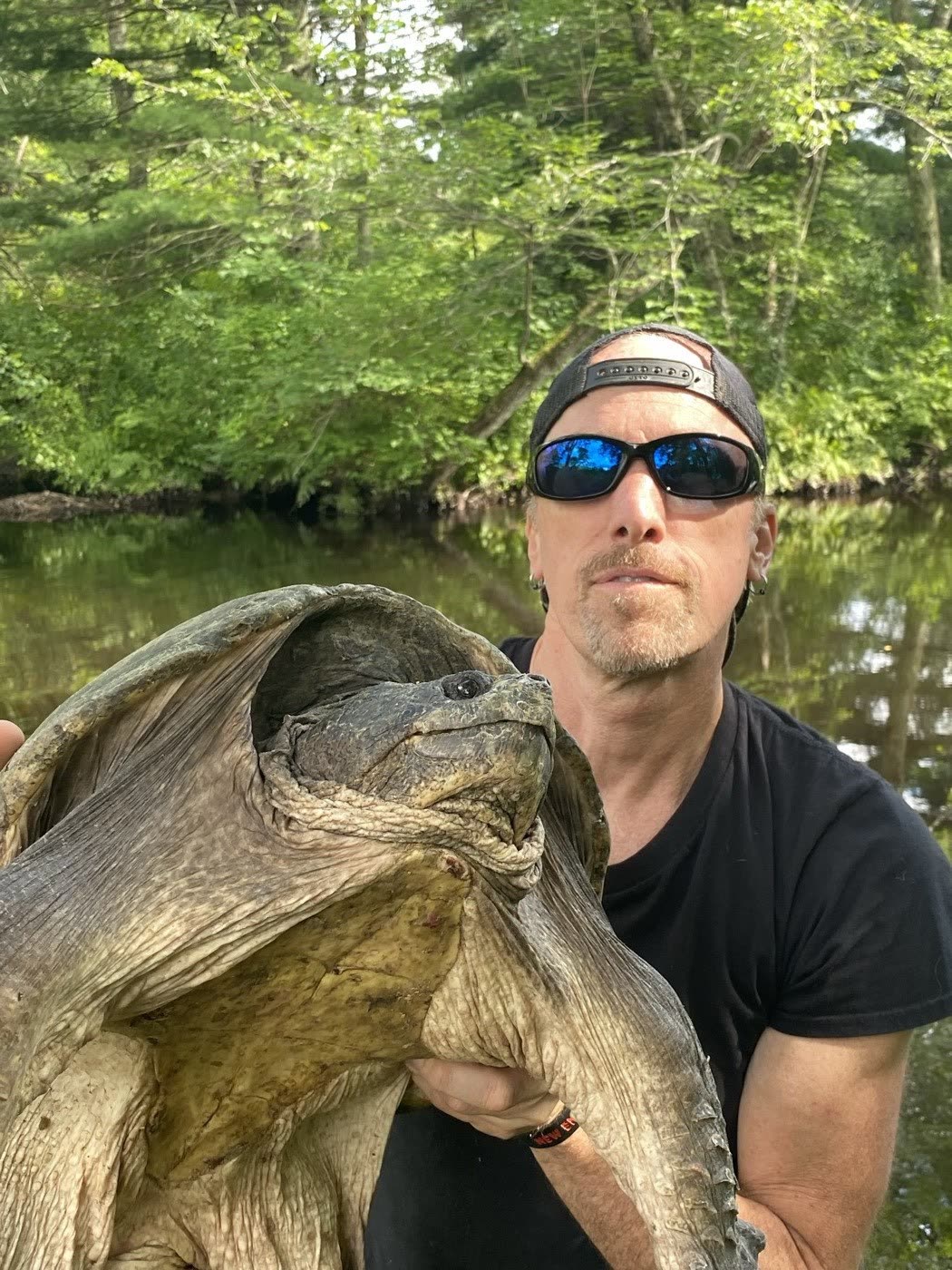
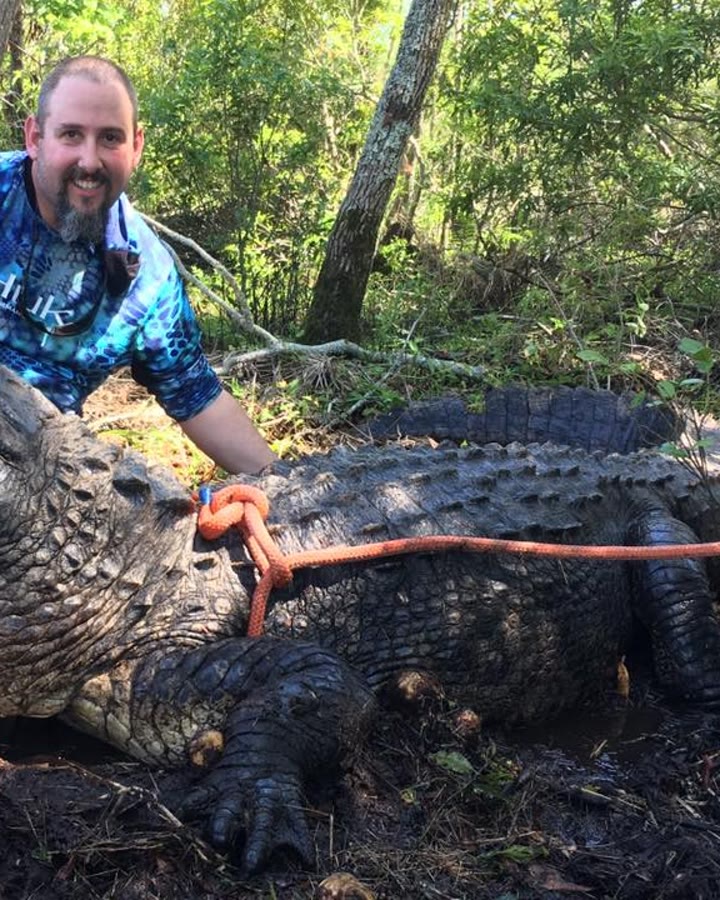
He leads hands-on initiatives protecting some of North America's most vulnerable reptiles — Blanding's and common snapping turtles among them — locating and guarding wild nests from the subsidized predators that destroy the overwhelming majority of clutches, then head-starting hatchlings through their most dangerous first year before releasing them at a size that can actually survive. He's deeply involved in American alligator conservation, with more initiatives on the way.
He walks the walk and talks the talk — and he's the entire thesis of Citadel Culebra in one person: the best keepers alive are some of the best conservationists alive.
Dr. Steve Dinkelacker is a Ph.D. herpetologist, biology professor, and field researcher — and one of the people putting hard science behind our conservation work. But he isn't only an academic: he brings the hands-on credibility of a seasoned breeder and handler, the rare scientist who's just as comfortable in a collection as in a peer-reviewed journal.
Since 1998 he has studied turtle populations across the United States — bog, spotted, and Blanding's turtles through to common and alligator snapping turtles — and published peer-reviewed research on American alligators. Since 2011 he has led an ongoing mark-recapture program on American alligators across the Albemarle Peninsula of North Carolina: exactly the kind of long-term, measured fieldwork real conservation runs on.
Field rigor paired with the classroom — a longtime professor and a pioneer of online science teaching. We salute him alongside Kevin: proof that keeping, breeding, and conservation were always meant to be the same calling.
Pick one fight today. Stand behind all of them.
PROGRAM 02 · LANDIN PROGRESS
Steve-O Wildlife Land Trust
Buy the land. Hold it wild. Forever.
The most direct way to protect a species is to protect the ground it lives on. The Steve-O Wildlife Land Trust is an initiative we're launching to purchase land and hold it privately — kept as a nature preserve and protected habitat, owned outright rather than left to the whims of development or shifting policy.
We'll outfit each property to be the ideal environment for whatever species is indigenous to that area — restoring habitat, easing pressure, and letting the land do what it does best. Private ownership, public purpose: wild places, permanently kept wild.
PROGRAM 03 · GLOBAL · ZAMBEZI RIVERIN PROGRESS
Warren Wildlife Alliance
Crocodiles, communities, and coexistence on the Zambezi.
The Warren Wildlife Alliance is our global conservation arm, and its flagship work takes us to the Zambezi River — where we're building crocodile research initiatives alongside efforts to improve the lives of the people who live there.
The delta's fishing villages depend on the river to survive, and overfishing has pushed that balance to a breaking point — for the people and for the crocodiles they share the water with, with escalating, often deadly human–crocodile conflict the result. We're pairing active crocodile research with the real-estate and development expertise to ease the pressure on the river and help people and crocodiles coexist instead of compete. Several crocodile research initiatives are in progress now.
A rhino and an elephant are going extinct in real time.
Every ~15 min
an elephant or rhino is killed for ivory or horn
Ivan Carter is one of the most important voices in wildlife conservation alive — a tracker, conservationist, and founder of the Ivan Carter Wildlife Conservation Alliance, leading anti-poaching and human–wildlife-coexistence work across Africa. He's the reason the Zambezi crisis is on our radar at all.
And the clock is brutal. An elephant or a rhino is slaughtered for its ivory or horn roughly every 15 to 45 minutes — two of the most iconic animals on Earth, pushed toward extinction in real time. They need every bit of support and awareness they can get. We want to bring this community together to back Ivan Carter and get him what he needs, because awareness without action is just noise.
between every elephant or rhino killed for ivory or horn
That love cannot end at the glass. It's our duty.
This is the part no one who loves animals is allowed to look away from. We are killing wildlife at a pace the planet hasn't seen in millions of years. An elephant or a rhino is slaughtered for its ivory or horn roughly every 15 to 45 minutes. We have destroyed entire populations of animals — and some are simply gone: the baiji, the Yangtze River dolphin, was declared functionally extinct in China, the first dolphin species driven to extinction by human hands.
We keep animals in captivity. We love these animals. And that love cannot end at the glass. There has to be a foundation of conservation underneath everything we do — because the people who dedicate their lives to animals are exactly the people who should have the loudest voices for them.
That's not optional. It's our duty. Citadel Culebra intends to use every bit of reach, knowledge, and resource we have to push for conservation — loudly, relentlessly, and for as long as it takes.
PROGRAM 01 · OUR #1 FOCUS
Introducing Culebra Conservation.
Reptile conservation — starting with the snakebite crisis.
81,000–138,000
people killed by snakebite every year
Snakebite InitiativeField workBreeding for release
Culebra Conservation is our reptile conservation program — and our number one focus is the crisis almost nobody is talking about: snakebite. Snakebite envenoming kills somewhere between 81,000 and 138,000 people every year and leaves roughly 400,000 more with amputations or permanent disability — overwhelmingly the rural poor of the Global South. The World Health Organization calls it one of the biggest public-health crises you've never heard of.
We're working to partner with the Snakebite Initiative to help bring those numbers down — supporting antivenom access, education, and the field knowledge that keepers uniquely hold. Nobody understands these animals like the people who keep them, and that expertise can save human lives while protecting the snakes that are slaughtered out of fear. Habitat work, monitoring, relocation, and breeding-for-release run underneath it all.